
There are diseases that societies fear rationally, based on genuine, well-understood transmission risk, and there are diseases that societies fear far beyond what the actual underlying medical facts would ever reasonably justify — and leprosy, for most of recorded human history, has fallen overwhelmingly and tragically into that second, more devastating category. People affected by leprosy have been cast out of their own families, expelled from their own villages, and denied even the most basic forms of human contact and dignity, based substantially on ancient fear and deeply entrenched stigma rather than on any accurate, contemporary medical understanding of how the disease actually spreads or how effectively it can be treated. Murlidhar Devidas Amte, known throughout India as Baba Amte, built his entire life’s work around directly confronting that stigma — not primarily through public education campaigns or policy advocacy alone, though he engaged in both, but by living, physically and daily, alongside people with leprosy, and by building an entire self-sufficient community, from nothing, specifically to give them the basic dignity that the wider society around them had so completely and cruelly denied.
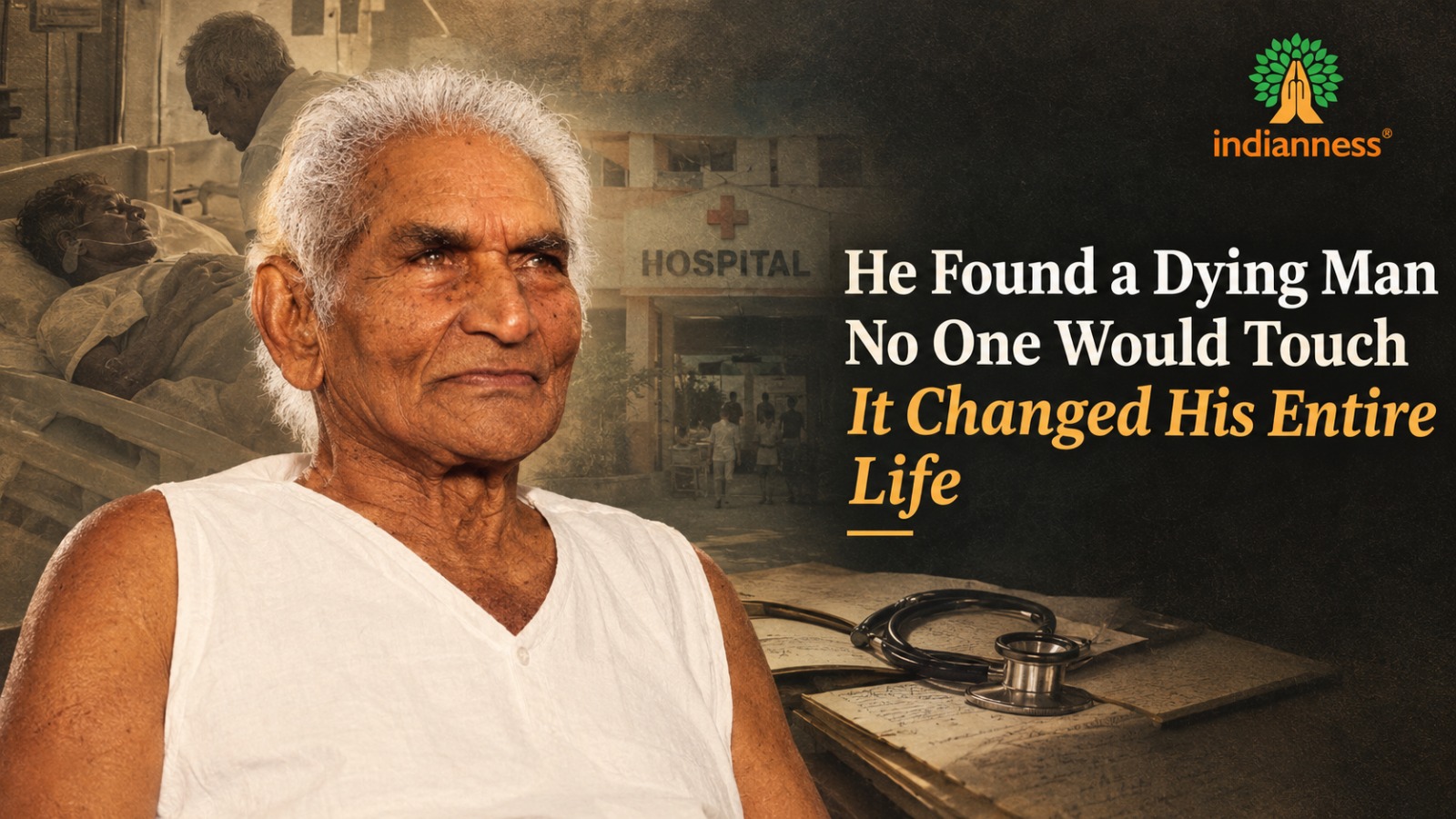
Amte trained originally as a lawyer and came from a comparatively wealthy landowning family, giving him a genuinely comfortable, conventional professional life he could easily have simply continued indefinitely. His life’s direction changed dramatically after a specific, deeply affecting personal encounter: he came across a man dying, alone and utterly abandoned, from complications of leprosy, lying in the rain with no one willing to even approach him closely enough to offer any kind of basic help or comfort. That single, direct encounter with the sheer, complete abandonment that leprosy could produce, even for someone in obvious, desperate need of basic human care, appears to have fundamentally reshaped Amte’s entire sense of what his own life needed to be devoted to.
Choosing to Live Inside the Fear Instead of Just Arguing Against It
Rather than working on leprosy as a distant policy issue or a topic for public health advocacy campaigns conducted from a comfortable distance, Amte made the specific and genuinely radical decision to actually live and work directly alongside people affected by the disease, and — in a detail that consistently appears across virtually every account of his life and that carried real, substantial personal risk given the medical understanding available at the time — he reportedly deliberately, publicly injected himself with leprosy bacilli at one point specifically to prove, through his own body and his own subsequent health, that the disease was nowhere near as easily transmissible through ordinary human contact as entrenched popular fear and stigma had led society to believe.
In 1949, Amte founded Anandwan, meaning “forest of joy,” in a genuinely desolate, largely uninhabited stretch of land in Maharashtra, initially with virtually no resources or outside support of any kind, and specifically as a self-sufficient community explicitly built for people affected by leprosy — a great many of whom arrived at Anandwan after already having been completely rejected and cast out by their own biological families, their home villages, and virtually every other social institution or community connection they had previously belonged to.
Building a Whole Town, From Nothing, on Land No One Else Wanted
What Amte actually built at Anandwan over the following decades went dramatically beyond a conventional medical treatment facility or care home. It grew into a genuinely comprehensive, largely self-sufficient community complete with its own schools, its own hospital, its own workshops producing goods for both internal community use and external sale, and its own agricultural operations — deliberately structured and organised so that residents, including many who had lost fingers, toes, or other physical capability to the disease’s effects, could nonetheless engage in genuinely meaningful, dignified, and economically productive work rather than being reduced to passive, dependent recipients of external charity.
This distinction between charity and genuine dignity mattered enormously to Amte’s entire underlying philosophy, and he was explicit and consistent about it throughout his life. He consistently, deliberately resisted framing Anandwan’s residents as helpless, purely pitiable objects of external charitable sympathy, insisting instead, through the practical, everyday structure of the community itself, that people affected by leprosy remained entirely capable of meaningful, productive work, of genuine self-governance, and of building a fully functioning, self-respecting community — provided they were actually given the fair opportunity and the basic resources to do so, rather than being permanently defined and confined by the disease and the accompanying, often crueler social stigma that had followed them everywhere else in their lives before Anandwan.
Choosing the One Cause With No Comfortable Path to Funding or Fame
Leprosy work occupied a genuinely difficult and thankless position within the broader landscape of humanitarian and philanthropic causes for much of the twentieth century — a disease surrounded by such deep, ancient, and pervasive stigma that even many well-intentioned charitable organisations and government health programmes actively avoided close, direct association with it, for fear of stigma-by-association affecting their own broader public support and fundraising. Amte worked in this specific, genuinely difficult space for decades, at a time when securing sustained funding, public attention, and consistent government support for leprosy-focused work was consistently and significantly more difficult than for almost any other comparable humanitarian cause, precisely because the same deep, irrational public fear and stigma that made the affected patients’ individual lives so genuinely difficult also made the broader cause itself a persistently hard one to publicly champion and to raise sustained resources for.
He pursued this work anyway, for decades, building Anandwan into a large, genuinely self-sustaining community that, over time, came to house and support thousands of residents, while also becoming an internationally recognised and frequently cited model for rehabilitation approaches to leprosy and, later, disability more broadly — one that consistently and explicitly emphasised community integration, genuine self-sufficiency, and durable individual dignity over simple, passive medical treatment and containment alone.
A Legacy That Went Well Beyond Leprosy, On Purpose
Amte’s broader body of work also extended into environmental conservation and, in his later years, into vocal, sustained public advocacy against large dam projects that threatened to displace vulnerable rural and tribal communities — including direct, sustained solidarity and support for the Narmada Bachao Andolan movement, working alongside Medha Patkar and other activists on precisely the same underlying question about who genuinely gets to decide when and how vulnerable communities bear the concentrated costs of broader development projects. This consistent connection across seemingly distinct causes reflects something coherent and genuinely central running through Amte’s entire life’s work: a sustained, deeply held concern for people whom the wider society around them had decided, in one way or another, were simply too inconvenient, too frightening, or too economically insignificant to be worth the sustained trouble of properly, fairly, and humanely accommodating.
Amte received numerous major national and international humanitarian awards over the course of his life for this sustained body of work, but by most accounts of those who knew him and worked alongside him, he remained personally far more focused throughout his life on the continued, practical, day-to-day functioning and growth of the actual community he had built than on any of the formal recognition his decades of sustained work eventually received. Anandwan continues operating today, still home to thousands of residents, standing as a lasting, functioning testament to what became possible once one determined person decided that a level of human dignity society had collectively and cruelly decided one particular group of people simply didn’t deserve was, in fact, entirely achievable — provided someone was actually willing to do the difficult, unglamorous, and largely unfunded work of building it from nothing.
Sources: Maharogi Sewa Samiti (Anandwan) institutional history; contemporaneous and retrospective biographical accounts of Baba Amte’s founding of Anandwan and his later environmental and anti-dam advocacy.