
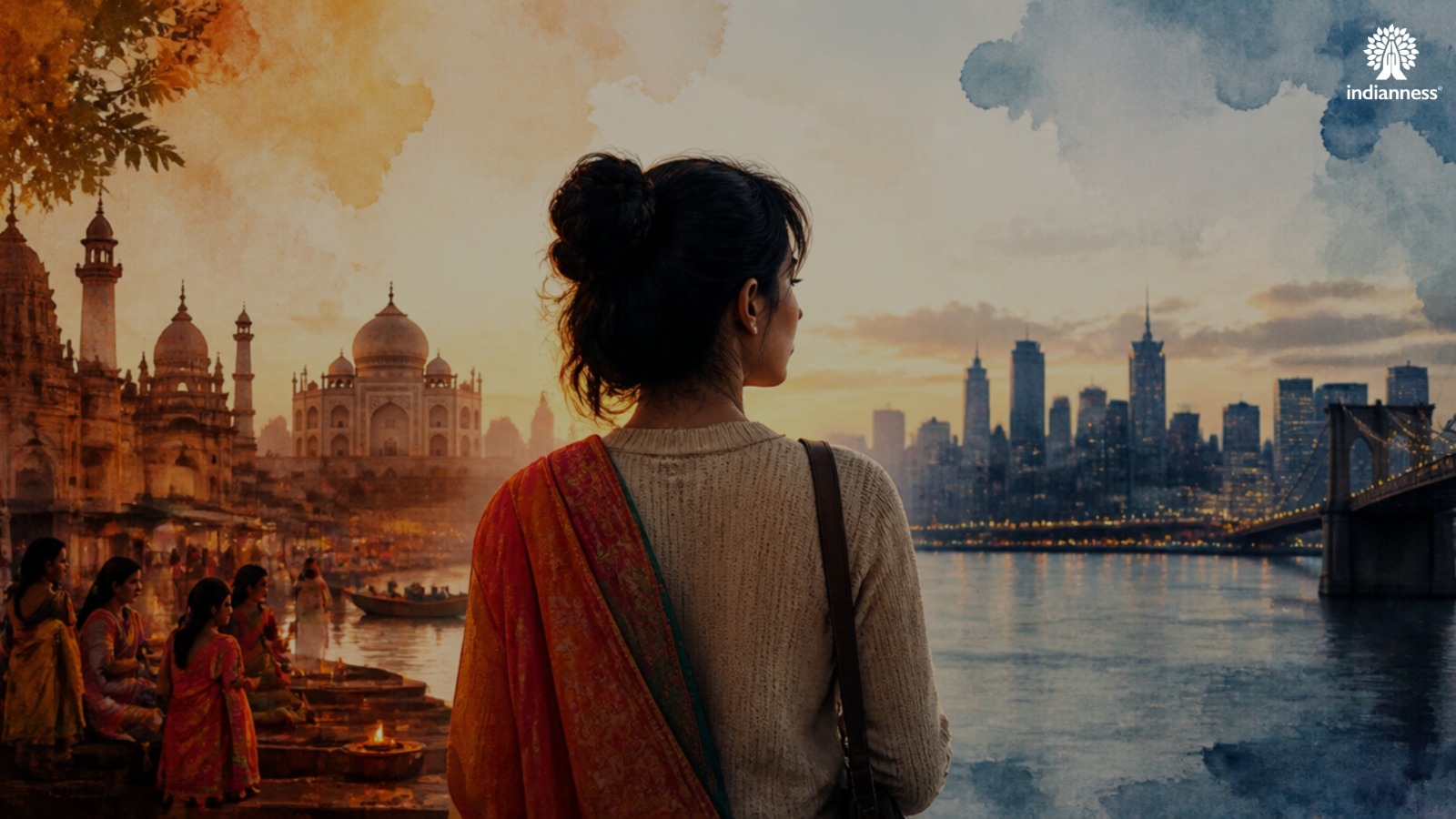
Exiting from the aircraft in Delhi or Mumbai results in an immediate sensory assault. Horns of cars honk while spicy smells are diffused in the atmosphere. For millions raised far away, this journey stirs complex internal questions. Exploring Indian diaspora identity reveals that belonging rarely depends on physical borders. Home is found in one’s memories, values, and cultural customs. The experience of growing up away from one’s native land affects their viewpoint greatly. A lot of people grow up seeing two completely different worlds before they finish their schooling years. Cultivating an Indian identity abroad is a continuous balancing act. You learn to honor ancient customs while speaking local neighborhood slang effortlessly. This dual existence builds remarkable emotional adaptability over time.
Heritage is far more than an entry stamped inside a passport book. Life away from home turns ordinary family traditions into important celebrations of culture. The vibrant culture of the Indian diaspora flourishes in the limited spaces of living rooms, kitchens, and community centers worldwide. The immigrants develop their own culture using whatever they have. This creativity helps preserve old roots overseas.
The Complex Experience of Belonging Everywhere and Nowhere
It is common for immigrants to perceive themselves as strangers in both countries. For instance, you will be an outsider in London but tourists in Chennai. The field of sociology is focused on the experiences of second-generation Indians. And they find themselves in such a thin social boundary. Expectations to fit into cultural categories that you do not belong to can only be addressed by embracing both societies. Your parents will go to great lengths to maintain cultural traditions. They register their children for classical dance classes and weekend language lessons. Celebrating Indian heritage overseas requires immense dedication from older generations living far away. Grandparents share folklore over choppy video calls across distant time zones. It will help to integrate the lessons of their forefathers in the present.
Identity is a living entity that is constantly evolving in the urban centers of the world. The families uniting with diverse backgrounds are continuously contributing to the formation of the identity of the Indian diaspora. Immigrant communities build supportive temples, mosques, gurdwaras, and cultural associations on foreign streets. These inclusive gathering spaces welcome newcomers seeking connection with familiar roots. Shared solidarity turns foreign neighborhoods into comforting, vibrant sanctuaries.
Generations navigate this emotional journey through distinct personal milestones:
- Balancing traditional parental expectations with personal Western social ambitions.
- Learning regional dialects for talking comfortably to family members.
- Wearing colorful traditional clothing to events at the mainstream high school.
- Packing aromatic home-cooked lunches despite worrying about classroom peer judgments.
- Traveling to ancestral villages to reconnect with forgotten family legacies directly.
Redefining Tradition: Food, Art, and Everyday Connection
Food establishes an inseparable connection between distant continents and past generations. The immigrant parents don’t waste time searching for curry leaves and mustard seeds. Preserving culinary Indian identity abroad means cooking slow, homestyle meals with love. One whiff of roasting cumin instantly transports busy professionals back home. A single meal revives dormant childhood memories across great distances. No medium better binds the world’s people together than music, movies, and festivals. The dance floors at various festivals glow under the excitement of Garba and Diwali celebrations. This generation adds the flavor of the Indian diaspora into the 21st century. And they use music, arts, and digital stories for it. Young artists can easily integrate Bollywood music and hip hop together.
Identity issues usually come to the forefront during adolescence and early adulthood stages. They have to deal with their own conflicts of dating, work, and familial obligations. There are many second-generation Indians who find their unique ways to succeed. They reject rigid historical molds without abandoning their core family principles. Their distinctive journeys prove that cultural loyalty assumes many unique forms.
Finding Meaningful Ways to Anchor Your Heritage
Preserving cultural memory across continents requires steady, mindful family practices. Many people build meaningful connections with their roots through deliberate daily habits. Grounding personal Indian heritage overseas involves thoughtful choices that fit modern working lifestyles:
- Cooking regional comfort meals using passed-down family spice blends.
- Practicing classical music, traditional dance, or ancient mindfulness routines.
- Documenting oral histories by interviewing aging family members on camera.
- Supporting independent social welfare initiatives throughout rural Indian communities directly.
- Selection of bilingual reading materials for inquisitive kids at home.
The act of visiting one’s hometown from abroad stirs up strong, conflicting emotions. You might easily recognize family facial features while struggling through basic dialect vocabulary. Yet these trips enrich your growing sense of Indian diaspora identity. Walking down ancestral village streets helps unlock personal identity puzzles permanently. You realize that your personal story forms part of a sprawling global journey.
Belonging need not come from perfect language proficiency or assimilation into society. You don’t have to establish your cultural purity for anyone else. Practicing meaningful Indian identity abroad means honoring your roots with quiet, confident dignity. You can love your morning chai alongside your daily flat white coffee. Inclusion of each and every element of your heritage is going to make you extremely unique. Diaspora communities constantly develop strong bridges between nations of different backgrounds and pasts. Their talent adds great value to global science, literature, politics, and corporate arenas. Indian diaspora culture keeps on expanding to enrich our contemporary societies. They carry ancient wisdom while charting bold new international paths forward.
Embracing the Future of Global Identity
The future generations shall craft their very own pages of this global story. They will define heritage through digital platforms and art. Dynamic young second-generation Indians lead essential conversations on identity, belonging, and multiculturalism worldwide. Their voices encourage everyone to celebrate diverse ancestral backgrounds with fearless authenticity. Your roots will follow you wherever you choose to settle down in life. Being an Indian while being in a foreign land is a vibrant journey that keeps on evolving. It is important for one to be proud of the Indian heritage overseas.
FAQs
-
What does Indian diaspora identity mean?
It describes the collective cultural consciousness of people of Indian descent living overseas. This identity blends ancestral values with the social customs of foreign host countries. It highlights how communities maintain pride in their roots across multiple continents.
-
How do Indians maintain their cultural identity abroad?
Families cook foods indigenous to the area and participate in major festivals. Not only that, they even organize local cultural societies for each other’s support. To be an Indian identity abroad is to pass on one’s language and culture to the next generation. Families also remain connected by arts, religion, and visits back home.
-
How does living abroad affect Indian identity?
Being abroad widens one’s worldviews while making one think of the heritage from which he or she comes. Being abroad makes one proud of his/her heritage. One ends up integrating different cultural aspects into daily life.
-
What challenges do second-generation Indians face with cultural identity?
Many balance strict parental traditions with surrounding Western peer pressures every single day. Second-generation Indians have a problem with language. This is because when they try to talk to their family abroad, they encounter difficulties.
-
How can Indian families preserve their heritage overseas?
Family members can engage in cooking traditional dishes, celebrate various festivals, and also preserve their own family histories. The preservation of the Indian culture abroad would be enhanced by traveling frequently to one’s homeland. Children participating in cultural classes helps in forming strong ties with the history.
-
How do Indian traditions change across generations in the diaspora?
Traditions are modernized to make them more convenient. However, altering the fundamental values of ethics and spirituality is not good. New generations understand traditions through modern art, fusion music, and civic festivals. Such natural transformations make the old traditions more relevant and alive for the next generations.