
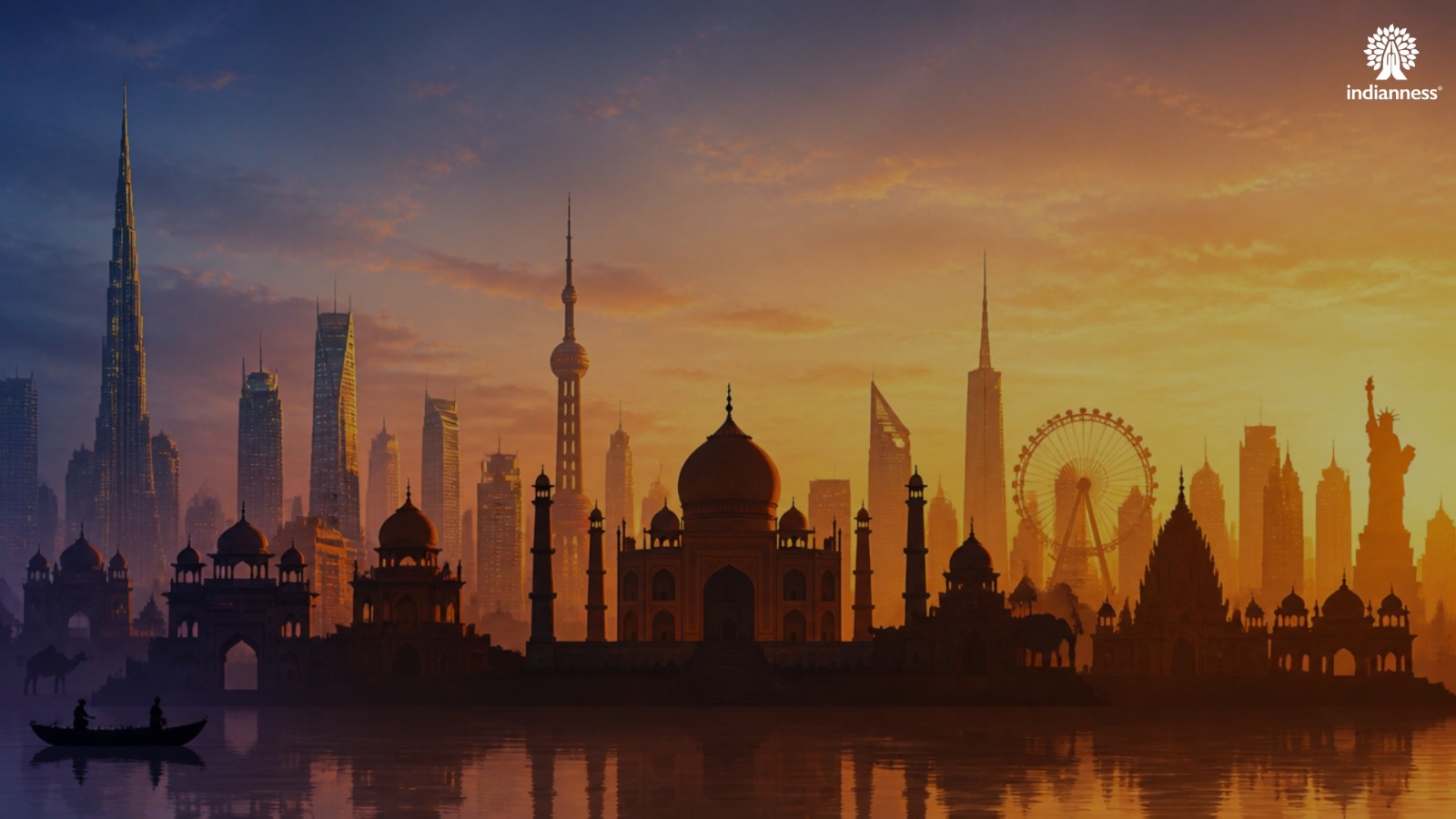
The Indian diaspora is one of the liveliest communities in the world. There are more than 35 million people living outside India. They stay in different countries of the world, making their home outside India. They contribute immensely in their new countries with tech expertise, culture, and economics. That’s how they keep shaping international business and diplomacy every day.
Every Indian diaspora community makes important bridges between India and the rest of the world. Their success in businesses, research, and policymaking helps India rise globally. They maintain their emotional and cultural connection with India.
What Is the Indian Diaspora?
Literally, Indians who migrated to foreign lands because of any reason come under the Indian diaspora. The word “diaspora” derives from the Greek term, which means “scattering” or “dispersal.” It is currently used to refer to people of the same nationality living in foreign countries. It refers to Indian citizens residing outside India and foreigners of Indian origin.
To comprehend the meaning of the Indian Diaspora, it is important to consider its constituents. This consists of non-resident Indians. They have valid Indian passports even when staying in other countries. There are also people of Indian origin having citizenship of other countries. All these individuals constitute communities and associations in major foreign countries.
History of the Indian Diaspora
The Indian diaspora’s history spans several centuries. That accumulates to four distinct historical eras. The ancient Indian traders, monks, and scholars reached Southeast Asia and East Africa. They exchanged their merchandise, science, languages, and art. These early expeditions formed the first firm base for cross-cultural exchange.
During the colonial period, there were numerous instances of large-scale labor migration in the Indian diaspora community’s history. Indian laborers were taken as indentured labor. So that they could work on sugarcane plantations by British colonial rulers. These hard-working people created flourishing communities in various countries. This includes Mauritius, Fiji, Guyana, Trinidad, and South Africa. Following their independence in 1947, new migrations took place to the UK and North America.
Where Does the Indian Diaspora Live Today?
Overseas Indians now reside in more than one hundred countries. The US hosts more than five million energetic people of Indian origin today. In the UK and Canada, large Indian populations enrich civic and political life. Australia and New Zealand also host rapidly growing populations of ambitious students and professionals.
The Arabian Gulf nations host another massive, hardworking Indian diaspora community. Millions of professionals in Saudi Arabia and the UAE drive critical local industries. In East and South Africa, historical Indian families manage major retail and manufacturing hubs. Every local Indian diaspora community preserves its unique traditions. At the same time, they actively support their host economies.
Global Impact of the Indian Diaspora
The global Indian diaspora helps to continually innovate and improve global tech, finance, and business. Indian corporate leaders and visionaries now head some of the largest multinationals. Indian entrepreneurs have even started innovations in Silicon Valley, London, and Singapore. They are even helping in creating jobs in good numbers around the world.
Additionally, the Indian diaspora has an impact on international healthcare, education, and the civil service industry. It comprises many doctors, surgeons, and nurses practicing in major global hospitals. There are Indian scholars who conduct research on science in major universities. Additionally, the Indian Diaspora consists of qualified politicians. They are serving as legislators, ministers, mayors, and presidents across the globe.
Identity and Connection to India
Cultural preservation is important to the Indian diaspora community. Festivals like Diwali, Holi, Navratri, and Eid are celebrated in various cities. These places are several thousand miles away from home. The parents teach their kids their mother tongue, classical dancing styles, and cooking. Local cultural associations arrange weekend sessions of culture for the youth. So that they can nurture the roots of old cultures.
The meaning of “Indian diaspora” becomes much clearer as the younger generation finds their roots. The second and third generations of young people integrate traditions and modern life without any difficulty. They often visit their relatives and join the cultural exchange programs in India.
The Global Impact of Overseas Indian Communities
Overseas communities represent an inspiring story of human migration, hard work, and triumph. Overseas Indians have preserved their rich heritage while excelling in demanding international arenas. They create valuable jobs, lead scientific discoveries, and foster lasting global goodwill everywhere. As India expands its international economic role, the Indian diaspora will drive mutual global progress.
FAQs
Is the Indian diaspora the same as an NRI?
An NRI is an Indian who resides abroad for professional or academic purposes. However, the Indian diaspora is a wider range of individuals. These individuals are non-citizens but have Indian origins.
What is the difference between NRI, PIO, OCI, and the Indian diaspora?
- An NRI has a valid Indian passport while living overseas for work.
- A PIO has a foreign citizenship but traces direct family ancestry to India.
- An OCI card ensures visa-free entry benefits for life to such citizens.
- The overseas population constitutes all these unique segments under a single canopy.
Can someone be part of the Indian diaspora without Indian citizenship?
Yes, millions of Indian diaspora individuals have foreign passports. They have a lifelong affiliation because of their common ancestry, family connections, and culture.
Which generation is considered part of the Indian diaspora?
Every generation that migrated from India is considered part of the global Indian diaspora. This is an inclusive definition. It applies to both first-generation immigrants and fourth-generation immigrants.
Why is the Indian diaspora considered one of the largest in the world?
Over 35 million people of Indian origin live outside India. The sheer number of people in this community makes it a significant global player.
What role does the Indian diaspora play in India’s global influence?
The overseas Indians promote the trade, foreign investments, philanthropy, and cultural diplomacy. They act as cultural ambassadors of India abroad.